

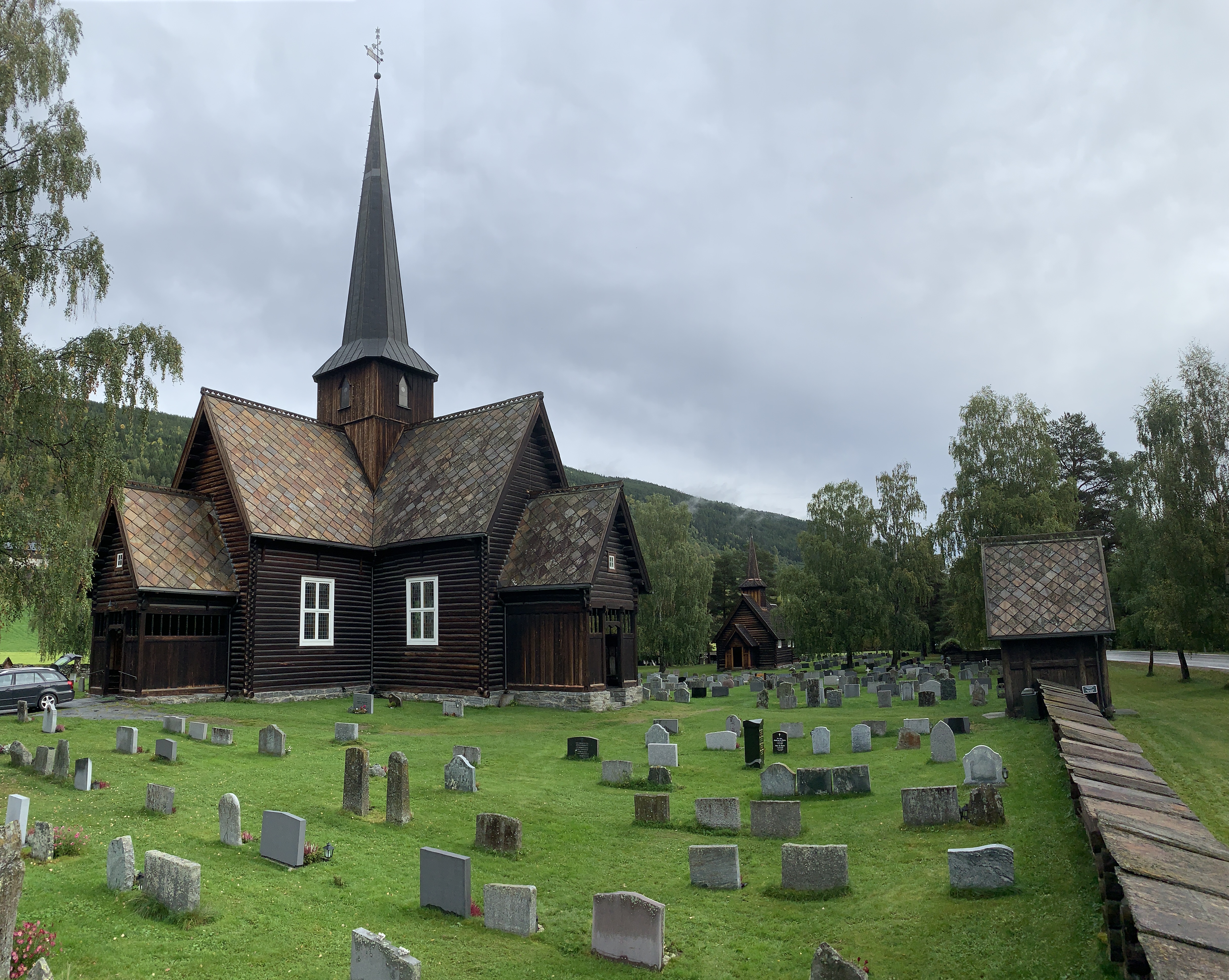
Heidal Church is a log-built cruciform church consecrated on June 8, 1941.
The church is an approximate replica of the previous church that stood on the same site but was destroyed by fire after a lightning strike in 1933. Much of the interior is copied from the former church. The church was designed by architect Bredo H. Berntsen, and the master builder was Knut Villa.
Earlier Churches in Heidal
The first known church in Heidal was located at Nordre Prestgard, or Myklabosadir as it was called at the time. The church may have been built between the years 1000 and 1050 and was either a post church or a stave church. According to legend, a suicide victim was buried in the churchyard at Nordre Prestgard, and his dog dug down to the coffin and lay on it to die. This was considered a severe desecration of the consecrated ground, and the church had to be moved. The reliability of the legend is uncertain, but for some reason, the church was moved from Nordre Prestgard to the neighboring farm Bjølstad in the early 1500s. Eventually, that church also became too small, and a new log-built church was erected. This was one of the first log church buildings in Norway. The Bjølstad Church was in use until around 1754, when the new and much larger Thabor Church was built at Heringstadmoen.
June 26, 1933, however, would become a tragic day for the village.
Lightning struck the church, and it caught fire. The flames spread quickly, and it was impossible to save the building. Only the church silver, two candlesticks, the church records, and a unique crucifix were rescued. The church burned completely to the ground.
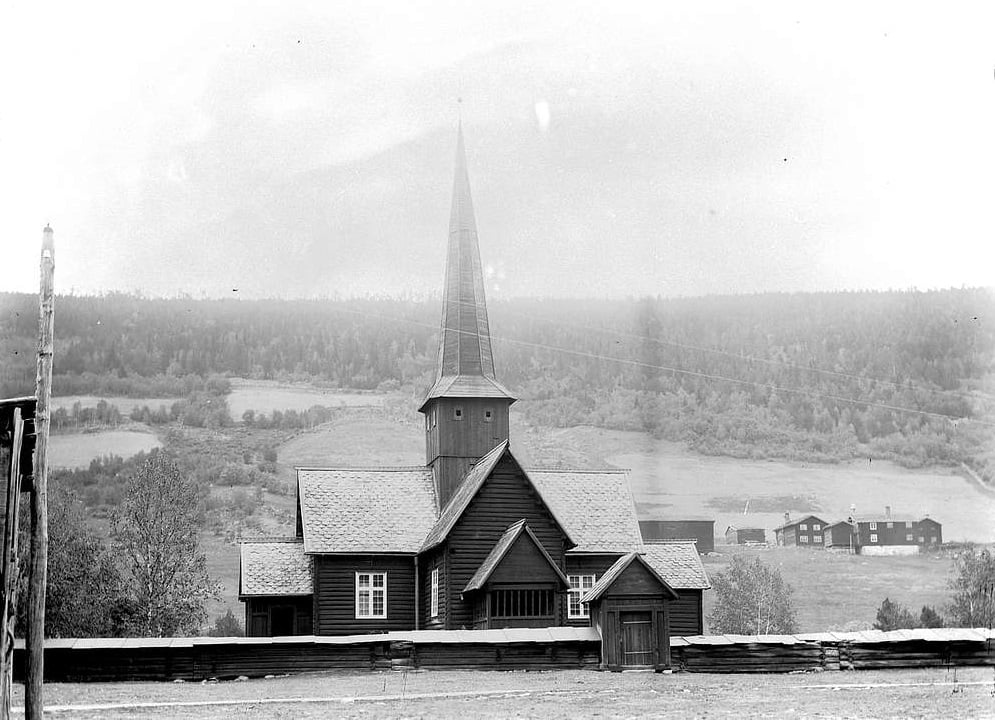 Old Thabor Church from 1754, which burned down after a lightning strike
Today's Heidal Church
The current church was consecrated and taken into use on June 8, 1941. After some debate about whether to build a new, modern church or to replicate the old one, the decision was eventually made to go with the latter. The new church was built on the foundations of the one that burned down and largely follows the same design as its predecessor. Heidal Church has 276 seats, offers good acoustics, and is frequently used for concerts.
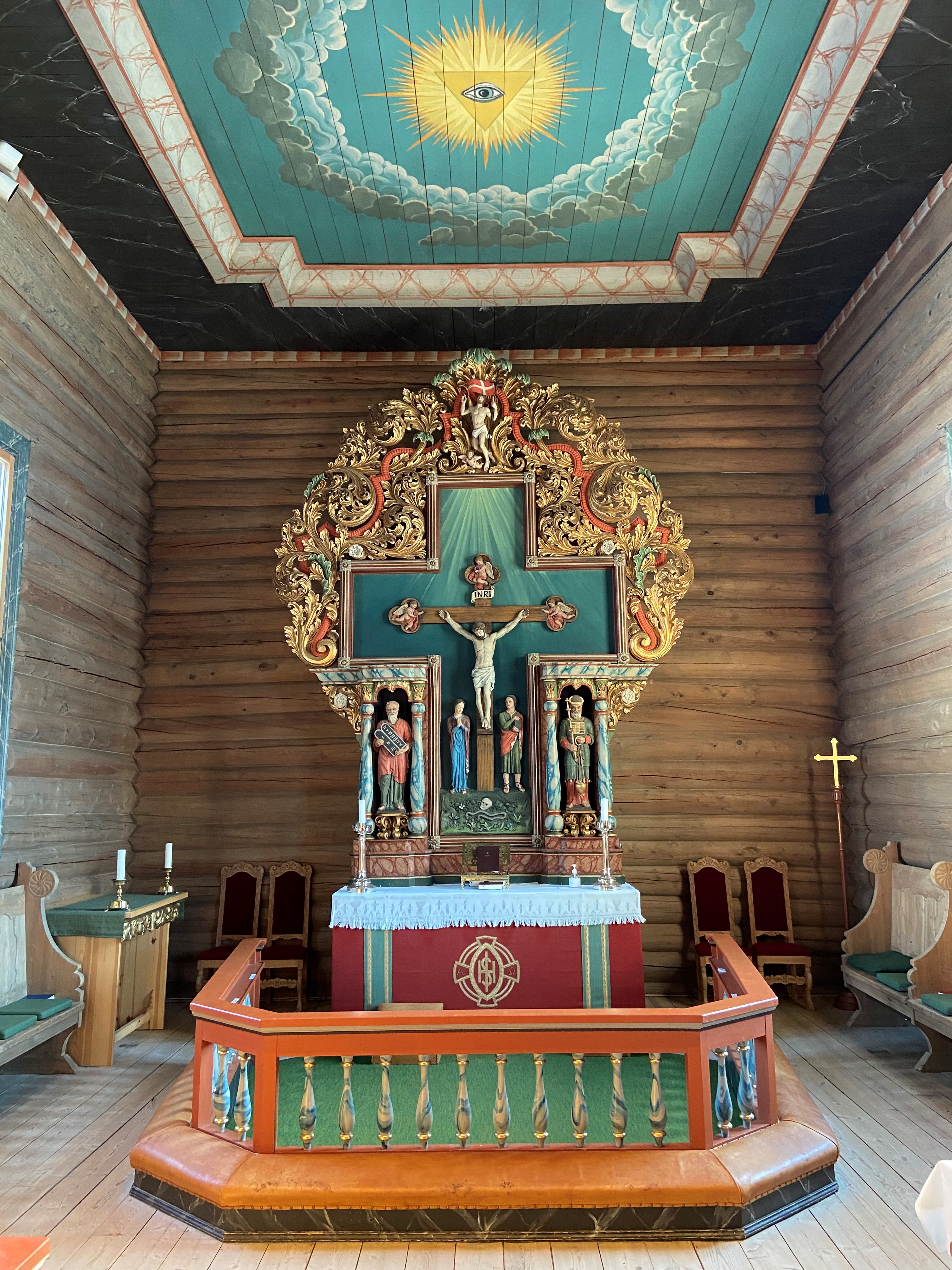 The chancel with the altarpiece
Most of those who worked on the reconstruction of the church were carpenters from the local community. Mathias J. Fjerdingren was responsible for all the wood carvings, assisted by Anders Johnsgård, Paul Sørhaugen, and Edvard Bakkom. The decorative painting was done by conservator Ulrik Hendriksen.
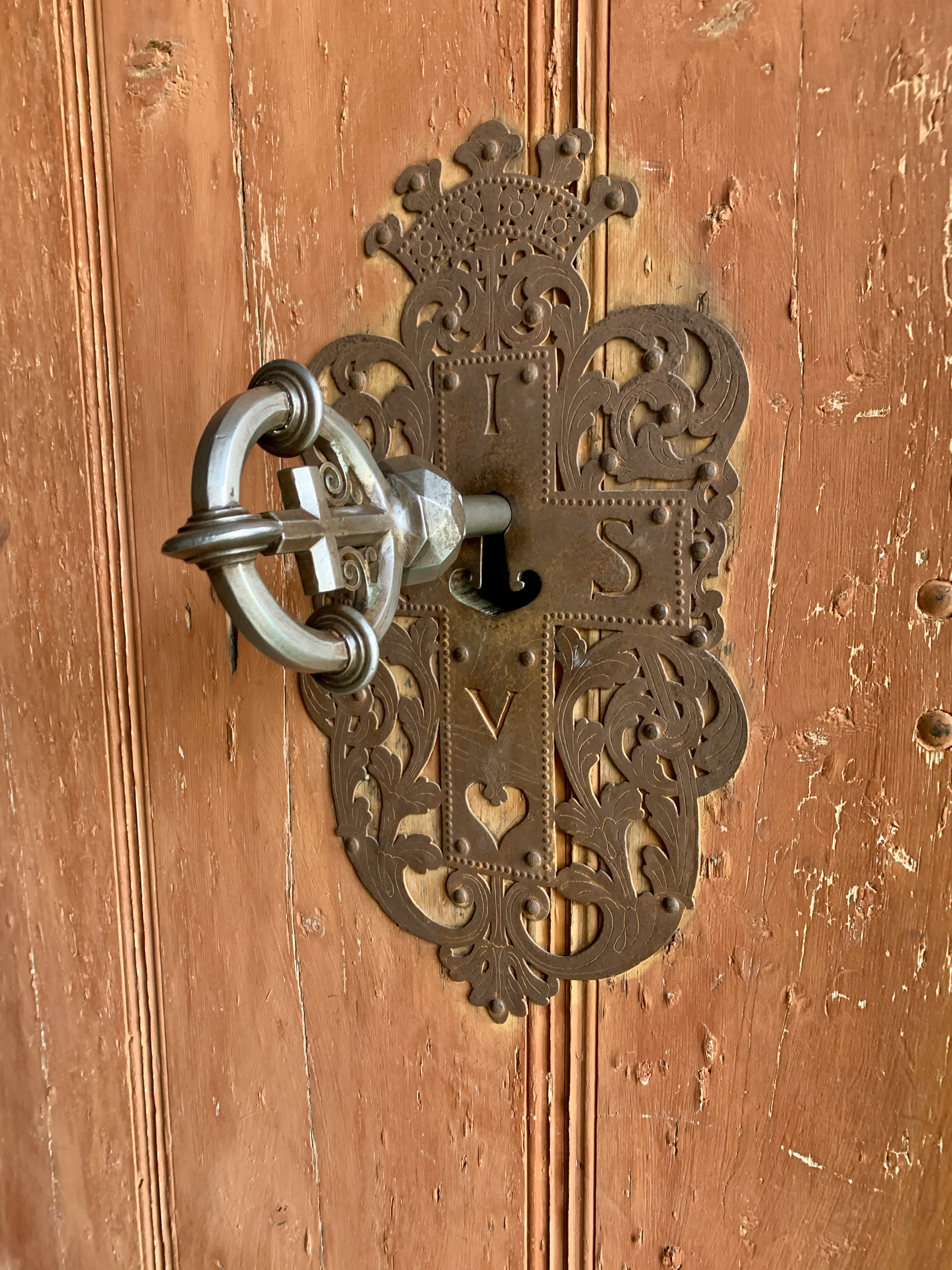
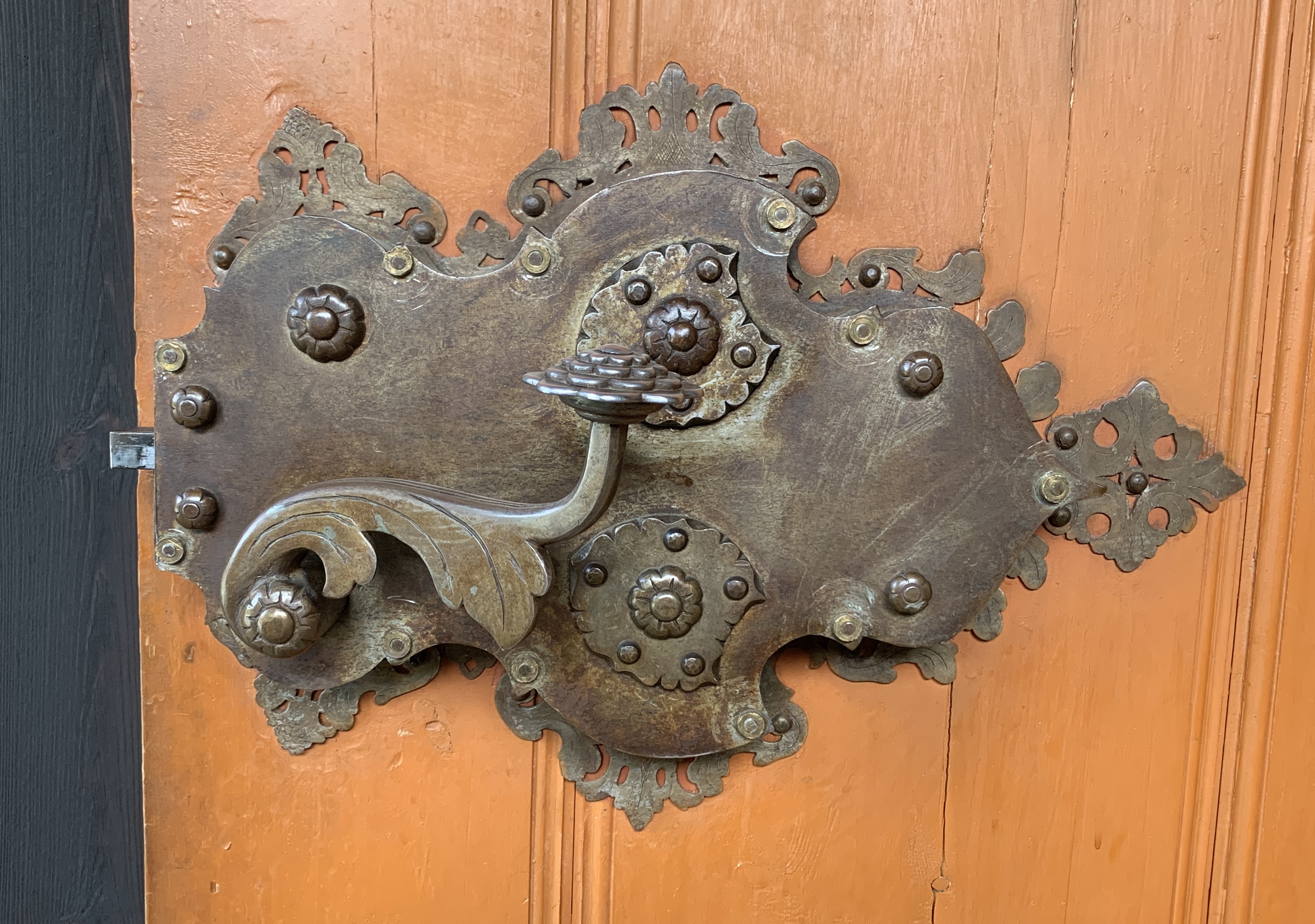 The ironwork — including the spire, locks, and door fittings — was crafted by Sigurd Kloppen
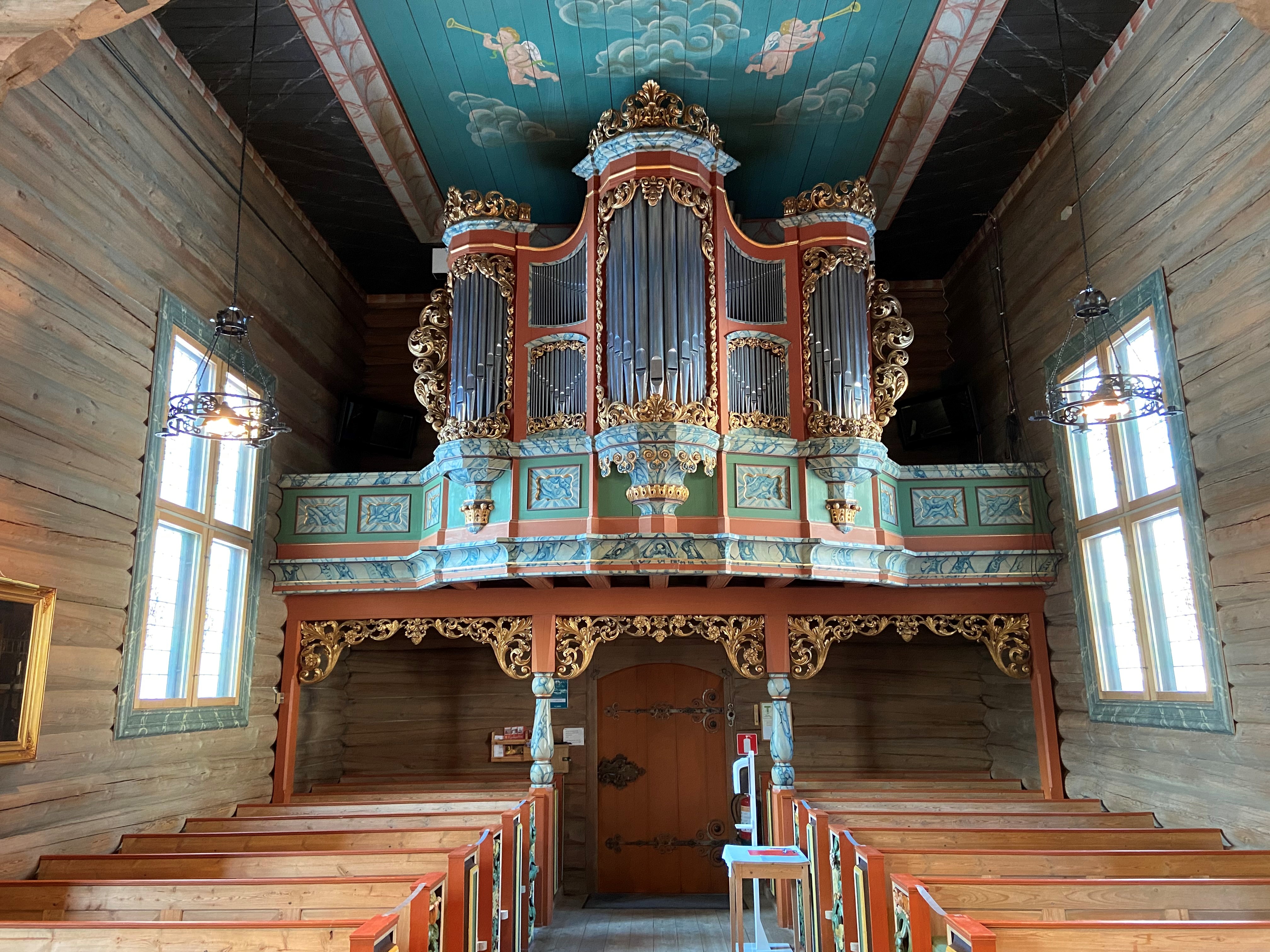 The organ in the church was built by Robert Gustavsson Orgelbyggeri.
It dates from 1991 and has 16 stops
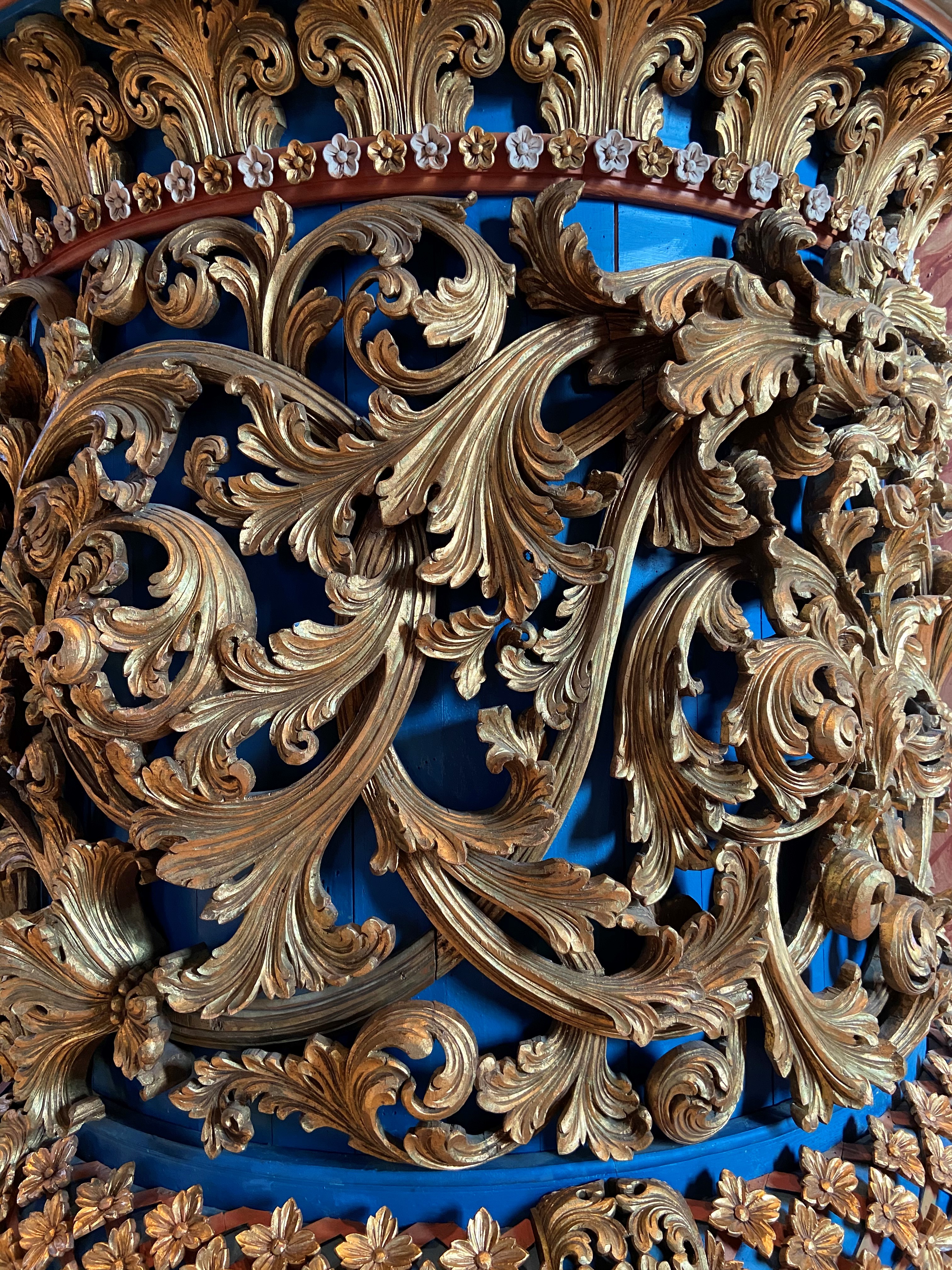 Detail from the pulpit
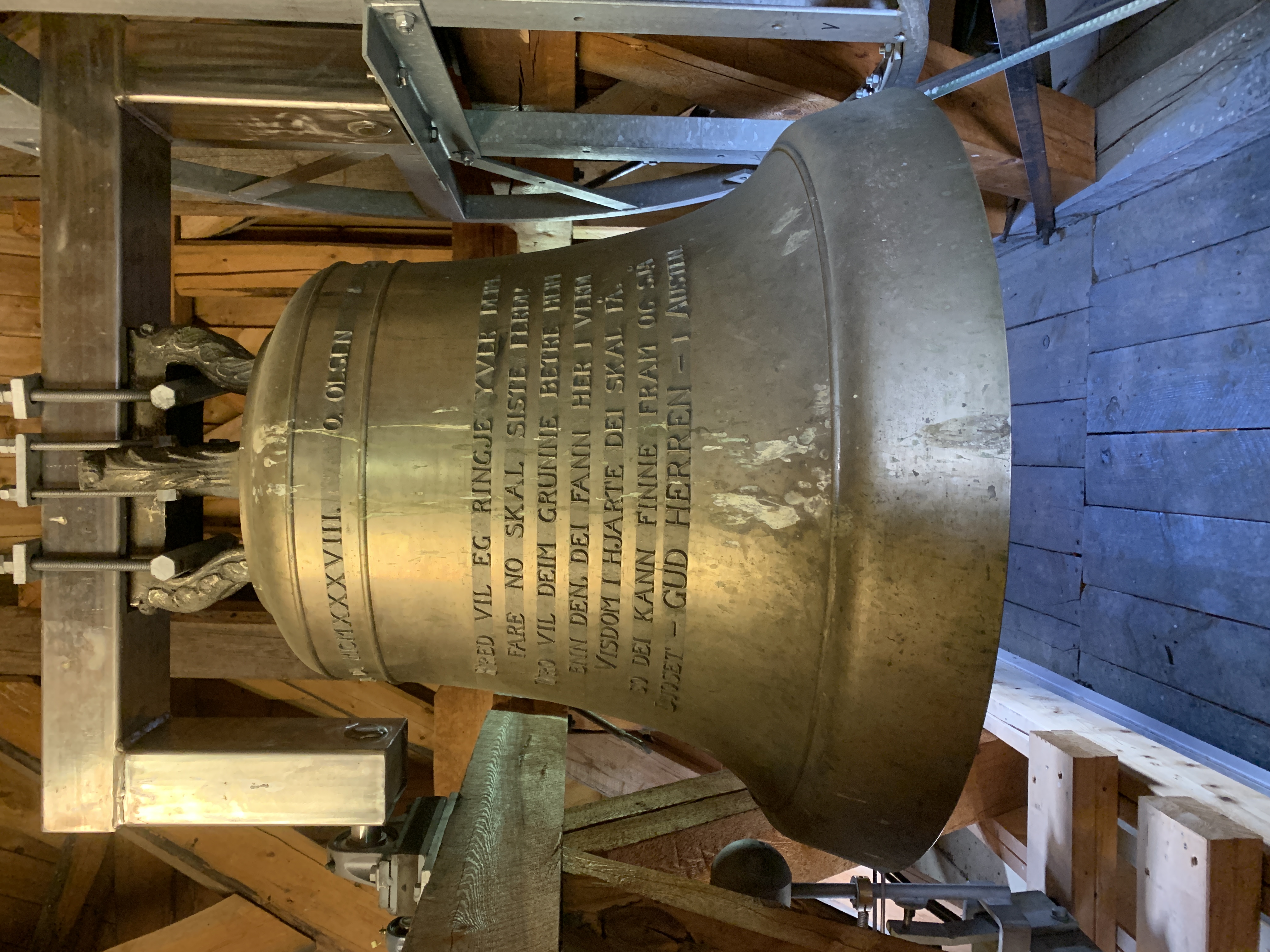 In the tower hang three church bells of different sizes. The picture shows the largest one. They were cast by O. Olsen & Son Bell Foundry in Tønsberg in 1938
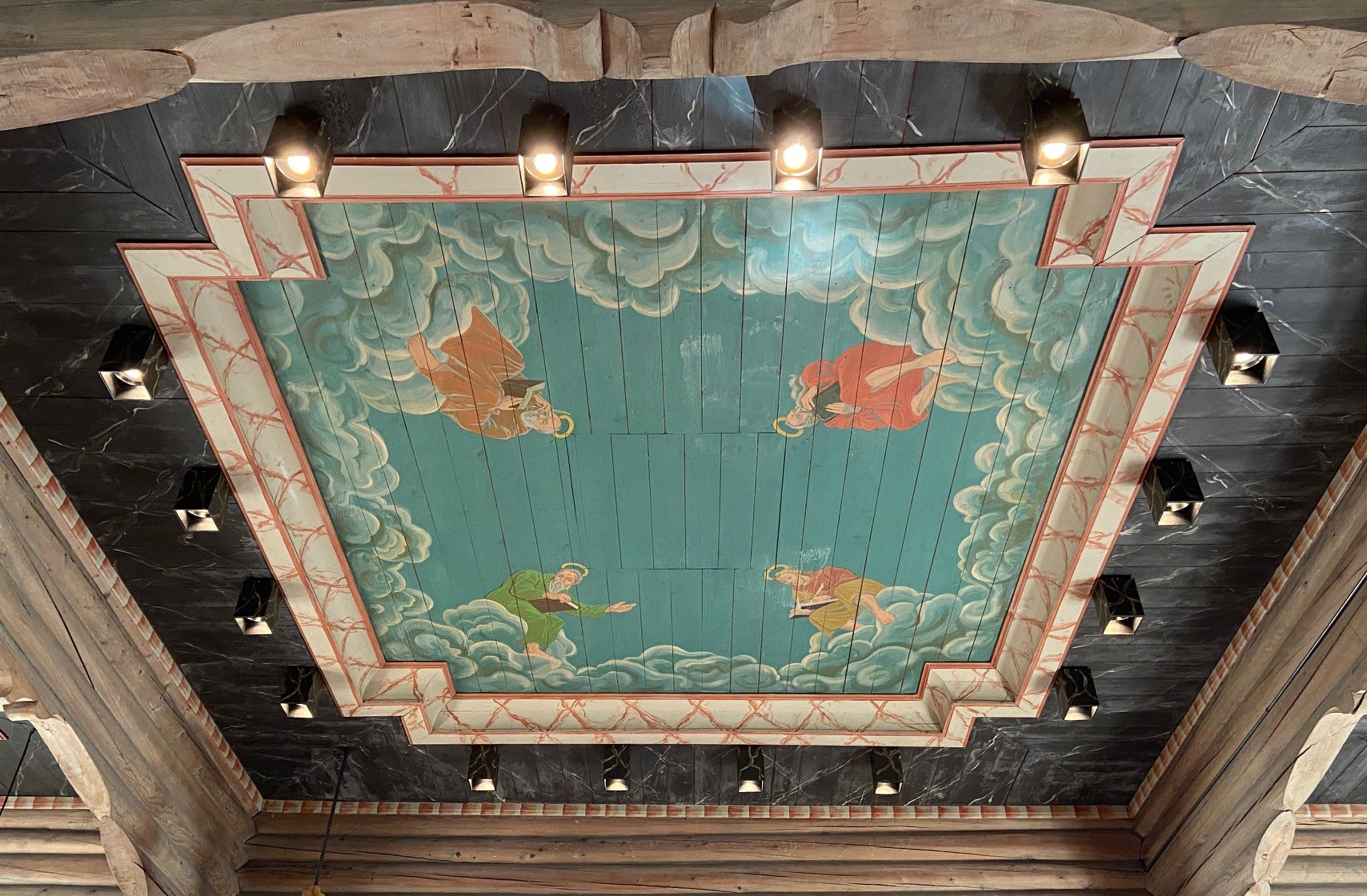 Ceiling painting by Ulrik Hendriksen. His son, Egil Weiglin, also participated. The work was carried out while lying on scaffolding.
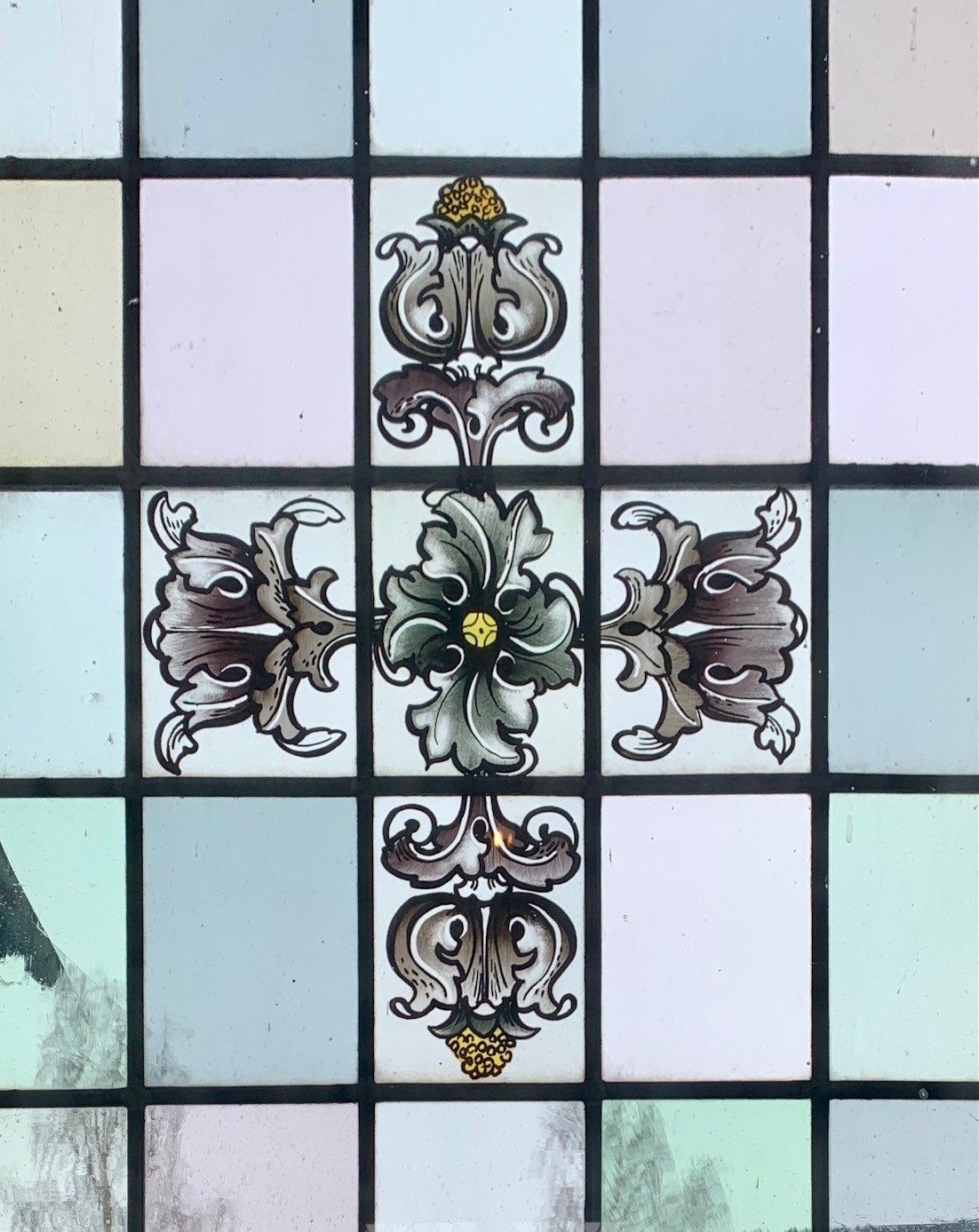 Acanthus motifs are also found in the stained glass windows
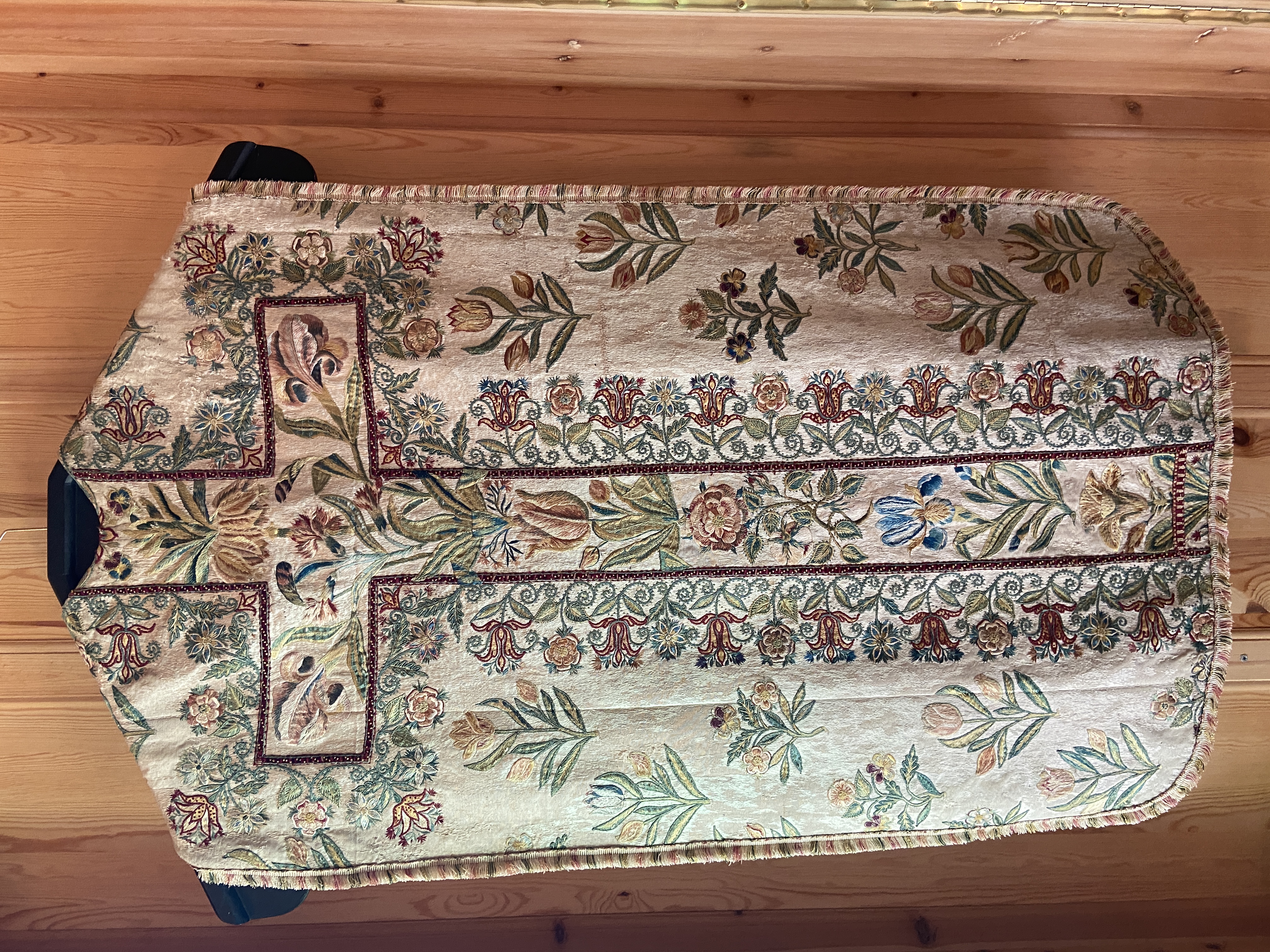 The chasuble belonging to the church was donated by the family of architect Bredo H. Berntsen and is likely from the 18th century. It was conserved and restored at the Museum of Decorative Arts and Design in 2006/2007.
Together with Bjølstad Chapel, the church hall, mortuary, gatehouse, log fence (timber railing), and churchyard, the complex in Heidal presents itself as a complete church estate.
You can take a digital tour of Heidal Church. You move around in the church by controlling your screen. Visit Heidal Church here