

Otta City Church is a church-room co-located with the Sel Church Office.
Otta City Church is a simple church room. The room was taken into use in 2008. The building previously served as a bank, and when the church office moved here in 2008, a church room was also established. The reason for establishing Otta City Church was the distance to the main church at Selsverket. In order to offer church services and other ecclesiastical ceremonies closer to where people in Otta live, Otta City Church was created. Worship services, baptisms, and weddings are held here. In addition, the facilities are used for choir rehearsals, various meetings, and confirmation gatherings. The church is normally equipped with 20 chairs, but additional seating can be arranged to accommodate up to 60 people.
The Altarpiece
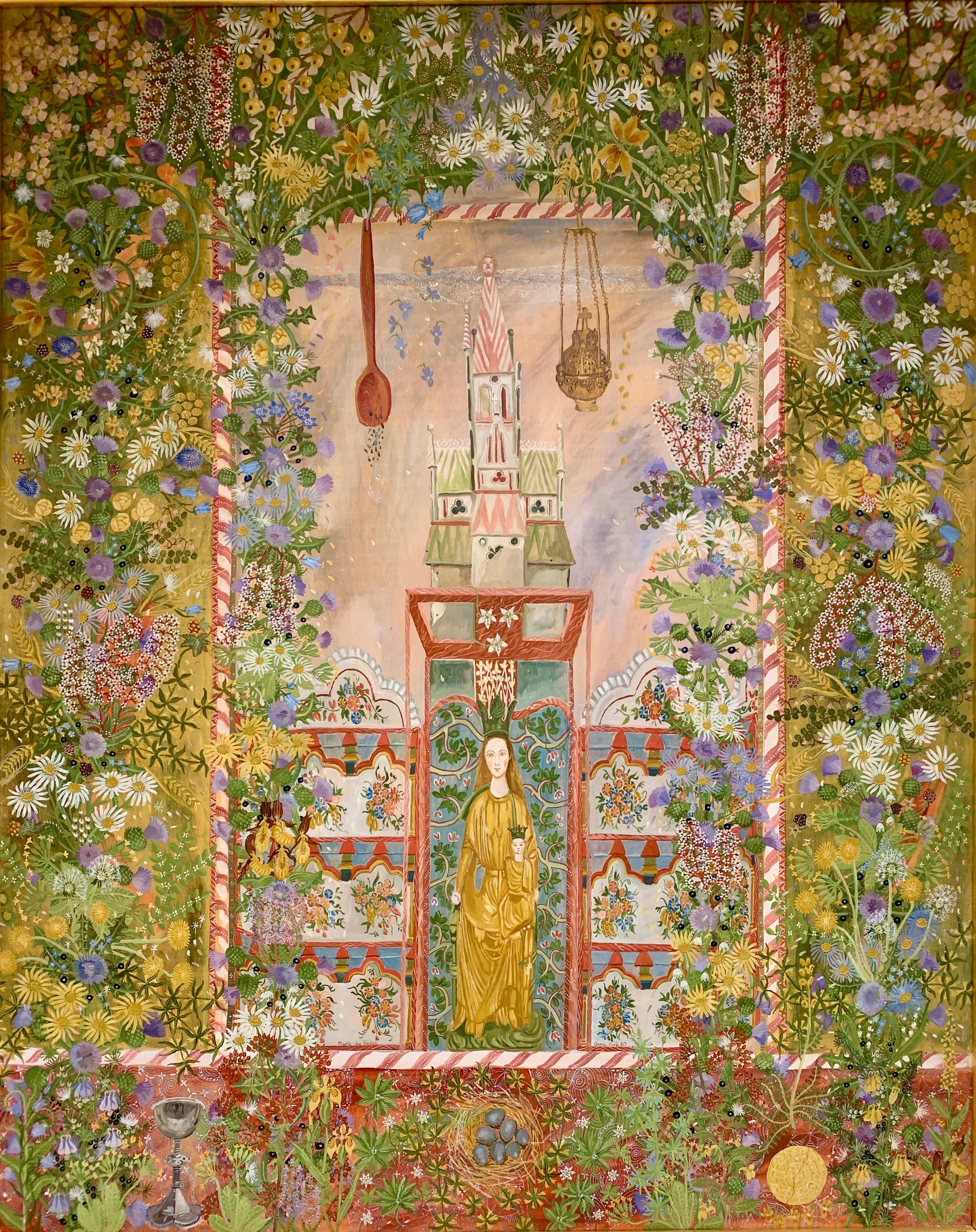
The Altarpiece is a gift from Karine Madslien, given to the Sel Church Council in memory of Sheriff Jørgen Madslien upon his passing in 1978. The altarpiece was painted by Anne-Lise Knoff in 1980. It was originally placed in the baptismal sacristy in Sel Church, until it was moved to Otta City Church in 2008. The painting contains many details and layers of symbolism.
The motif, featuring the Madonna, the altarpiece cabinet, and the small tabernacle, is inspired by the small pilgrimage church in Hedalen in Valdres. That church has a similar cabinet, a similar Madonna, and a tabernacle, but not combined in the way shown here. One could say it represents the church within nature — or the church within ourselves, if you will. The artist intended this to symbolize the Church of Norway as part of the universal, catholic (i.e., all-encompassing) church, portrayed in the form of a Gothic cathedral interwoven with flowers in the florid Gothic and flamboyant Gothic styles.
At the bottom of the painting are the bread and wine — the Eucharist — and a bird’s nest, symbolizing new life and the gifts of the Holy Spirit, surrounded by the flower yellow rattle (Rhinanthus minor), associated with Mary full of grace, filled with the Holy Spirit. Mary is seated by the tree — the Tree of Life — the Cross, as the new Eve, the one who "hung the fruit back on the tree." She sits at the entrance to Paradise and is herself the Janua Coeli — the Gate of Heaven.
The cabinets on either side, with many panels, symbolize: “In my Father’s house are many rooms.” The stars above her head, shaped as three St. Olav candlesticks, symbolize her virginity before, during, and after the birth. On many old icons, three stars are often used to represent this.
The wooden spoon with ash and water has two functions: it is used for committal of earth (at funerals) and for sprinkling holy water.
In earlier times, holy water was also sprinkled over fields to ensure a good harvest. Holy water is blessed water, and at its core it symbolizes the blood of Jesus — and baptism.
When water and wine are mixed during the Eucharist, or when water and blood flowed from Jesus’ side, the blood symbolizes His human nature, and the water His divine nature.
As it is written:
“There are three that bear witness in heaven: the Father, the Son, and the Holy Spirit; and there are three that bear witness on earth: the water, the blood, and the Spirit.”
The censer symbolizes the prayers that rise upward. The yellow spots represent myrrh. The gifts of the three wise men — gold, frankincense, and myrrh — are interpreted as follows:
-
Gold symbolizes Christ’s kingship,
-
Frankincense His priesthood,
-
Myrrh the grave.
In folk mythology, the names of saints have been preserved in flower names. Among them are:
Lady's Mantle (Marikåpe), Yellow Rattle (Marimjelle), Early Purple Orchid (Marihånd), Meadow Rue (Marigress), Eyebright (Mariauge), Lady’s Slipper (Marisko), and Golden Slippers of Mary (Maria gullsko).
The sword lily (iris) is also used in depictions of Saint Bridget of Sweden as a symbol of the prophecy: “a sword will pierce your heart.”
The alpine catchfly (fjellbrud, also called Bergfrue in Norwegian, meaning “Mountain Lady”) is referred to by the artist as another Mary flower. Other plants included are: King’s Scepter (Kongsscepter), Mullein (Kongelys), Hyssop, Mary’s Keychain (Maria nøkkelbånd), and St. Olav candlesticks (Olavsstaker).
The violet is also a flower of Mary. The painting also includes the Angel Thorn, a type of wild rose (nyperose).
The head at the top of the tabernacle (literally “the House of Bread”) may represent Christ as the head, but it can also symbolize the Church as the bride of Christ, or the Church as our mother. Since Mary carried Christ within her — as the words say: “Blessed are you who contained Him in your womb” — she symbolizes the Church as our mother. For the one whom even heaven could not contain, Mary became His bearer, and thus a symbol of the Church.
This is why so many churches in Europe are named Notre Dame or Santa Maria — all because of Mary’s relationship to Christ.
Were it not for her words, “Behold, I am the handmaiden of the Lord. Let it be to me according to your word,” the Church as we know it would not exist.
This leads to the question: What is baptism?
It is a mark upon our soul, which connects us to all of this.
Painting of the Disciples
In Otta City Church, there are paintings of the twelve disciples. Along with a painting of the Virgin Mary holding the Christ Child, they form a collection of artworks donated to the church. The collection was gifted by Marit Storrusten, who is also the artist behind the paintings.
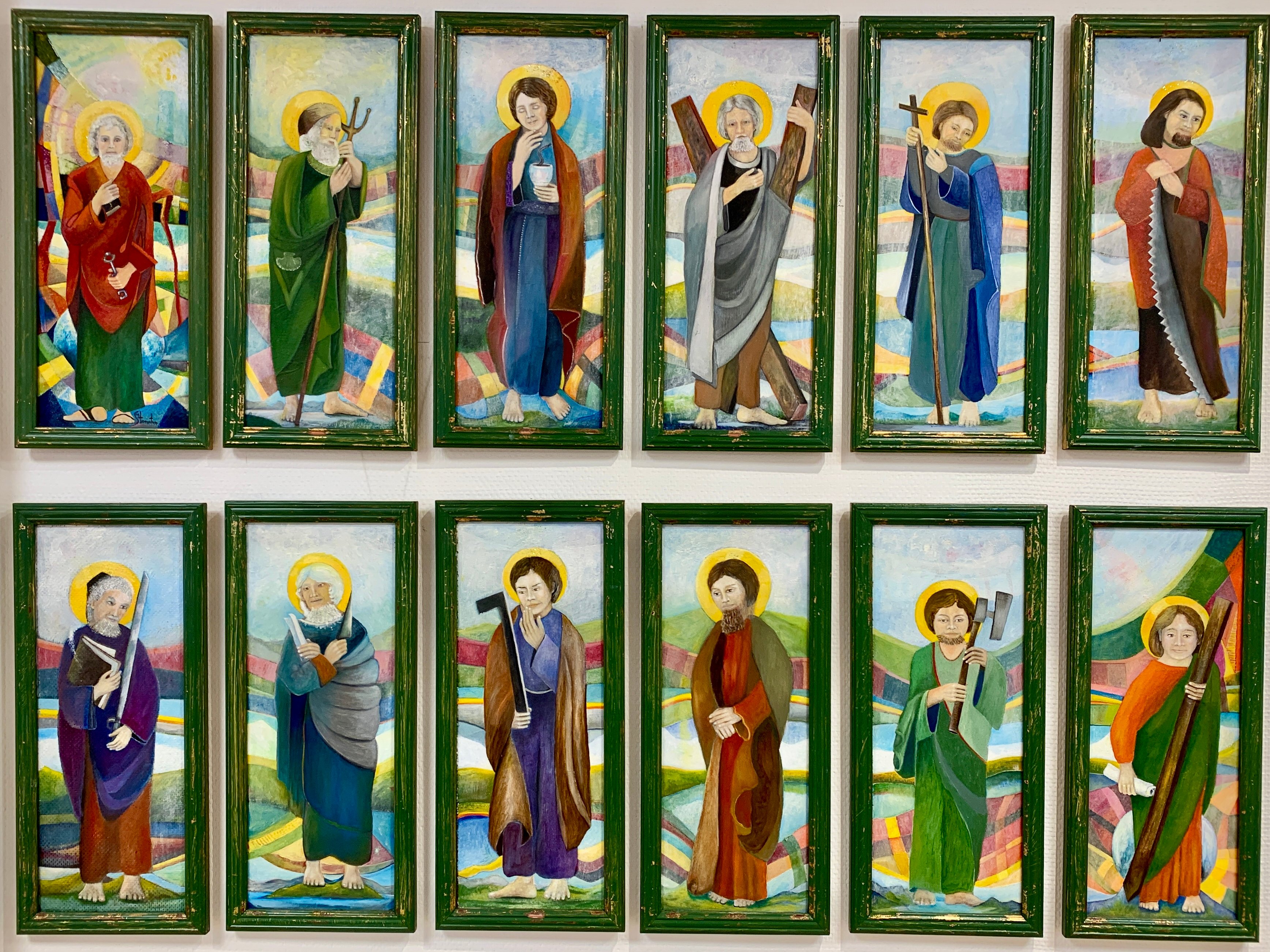 Top row from left: Peter, James, John, Andrew, Philip, and Simon.
Bottom row from left: Matthew, Bartholomew, Thomas, Judas, Matthias, and James the Lesser.
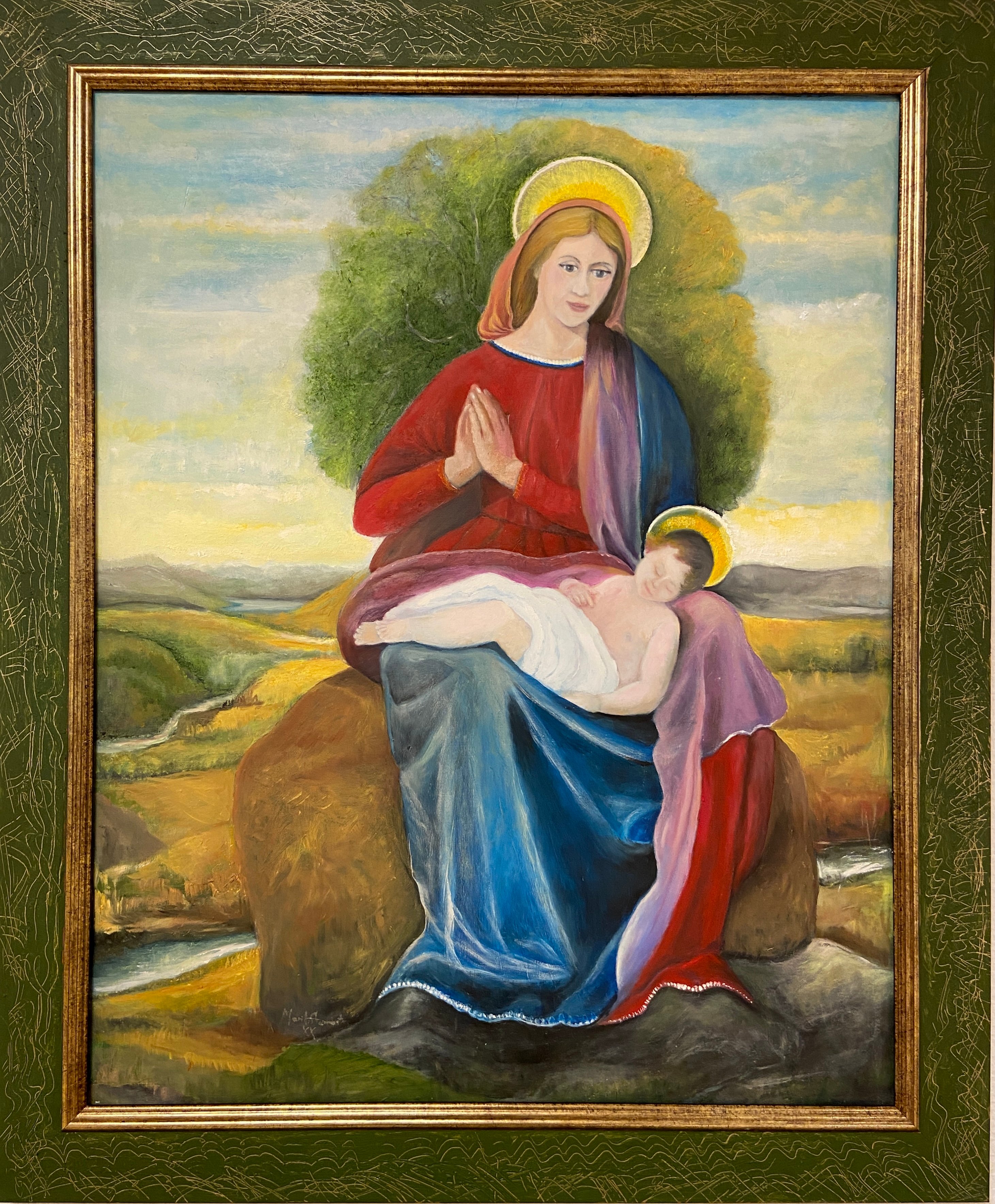 The Virgin Mary and the Christ Child. Freely inspired by Schnorr von Carolsfeld (1794–1872), painted by Marit Storrusten in 2019.
Chasuble from the 17th Century
She widened her eyes in astonishment — Sigrid Christie — when she saw the old chasuble hanging in the wardrobe of the sacristy in Sel Church. This happened in the early 1990s, when she and her husband, Håkon Christie, were traveling through the valley to visit churches. Both were employed by the Directorate for Cultural Heritage, specializing in church architecture and preservation.
"This is Italian silk from the 1600s, and it's only the dry climate that has kept it from being destroyed," said Sigrid.
It certainly had not been stored as it should have been. To keep it still on the hanger, it had been fastened with two safety pins.
The chasuble had not been in regular use for quite some time when it was "rediscovered." The last time it had been used was during the 210th anniversary celebration in 1952, when it was worn by Parish Priest Nils Berg.
Sigrid Christie gave recommendations on what needed to be done to preserve the chasuble. It had to be sent to the Museum of Decorative Arts and Design in Oslo for assessment and possible conservation.
The parish council decided to proceed, and after evaluation by specialists, the conservation work was estimated to cost NOK 25,000. However, the Museum of Decorative Arts and Design did not have the capacity to carry out the work at that time, so the chasuble was returned and stored at the town hall, awaiting an available time slot.
Years passed, and it was not until 2007 that the conservation work finally began. The chasuble was conserved, and a custom display case was made for its storage and protection.
It is remarkable that a garment of such age has been preserved so well. One cannot help but be impressed by the quality of the craftsmanship — how beautifully they wove such fine fabric so many centuries ago. The colors remain vivid: a deep purplish red with a black velvet pattern.
Today, the chasuble is kept at Otta City Church
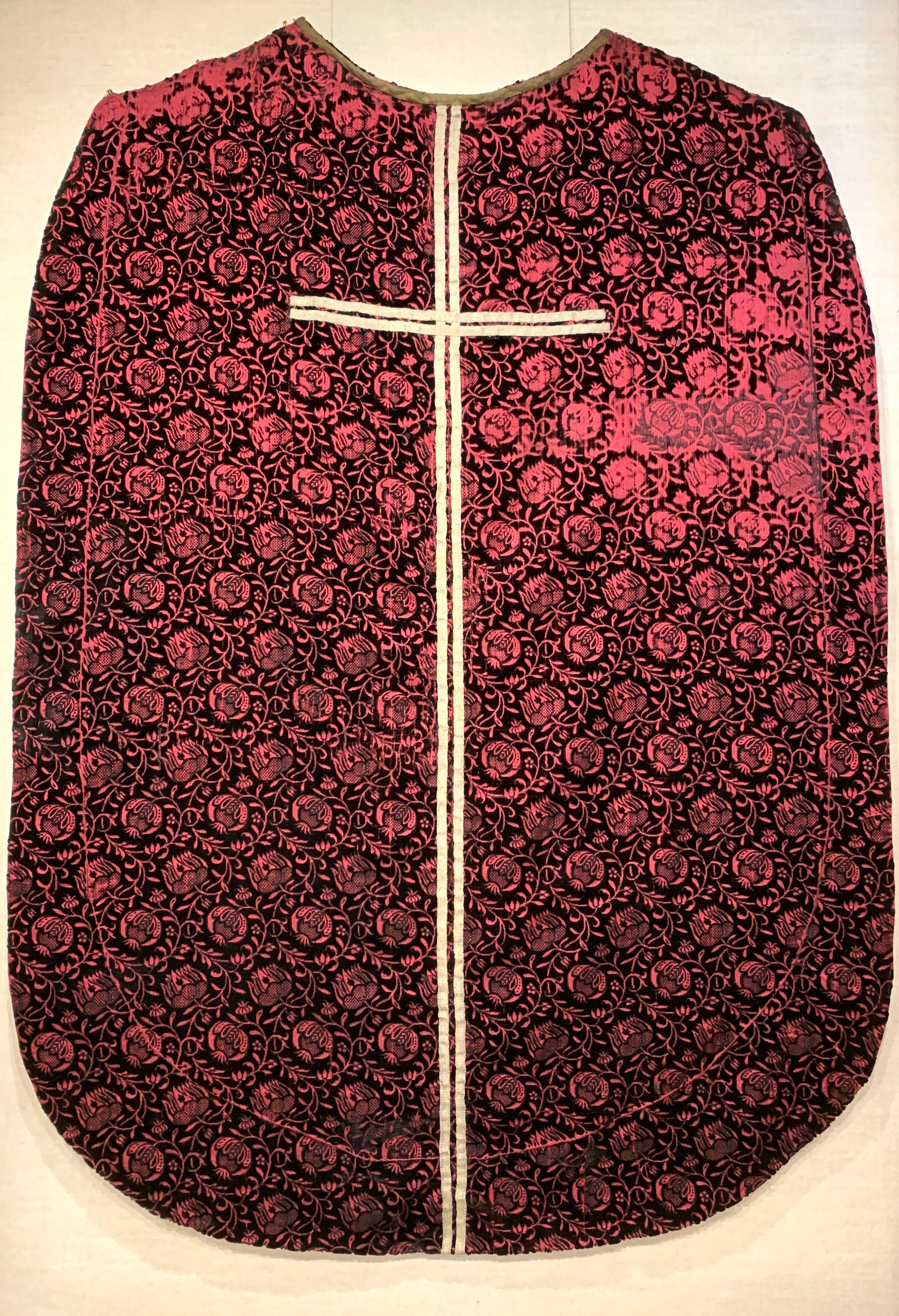
Chasuble in Italian Silk from the 17th Century.
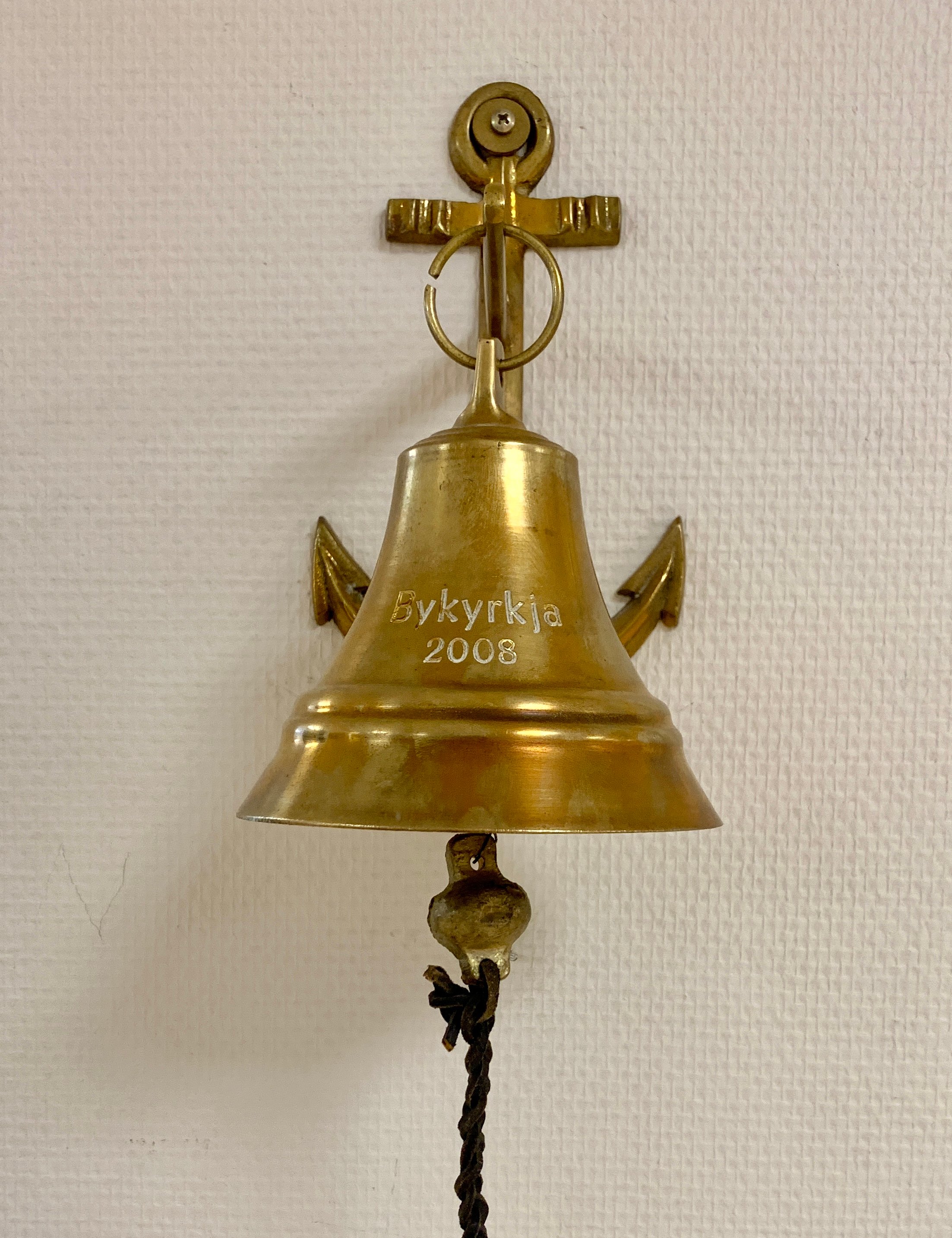
Interior Church Bell.
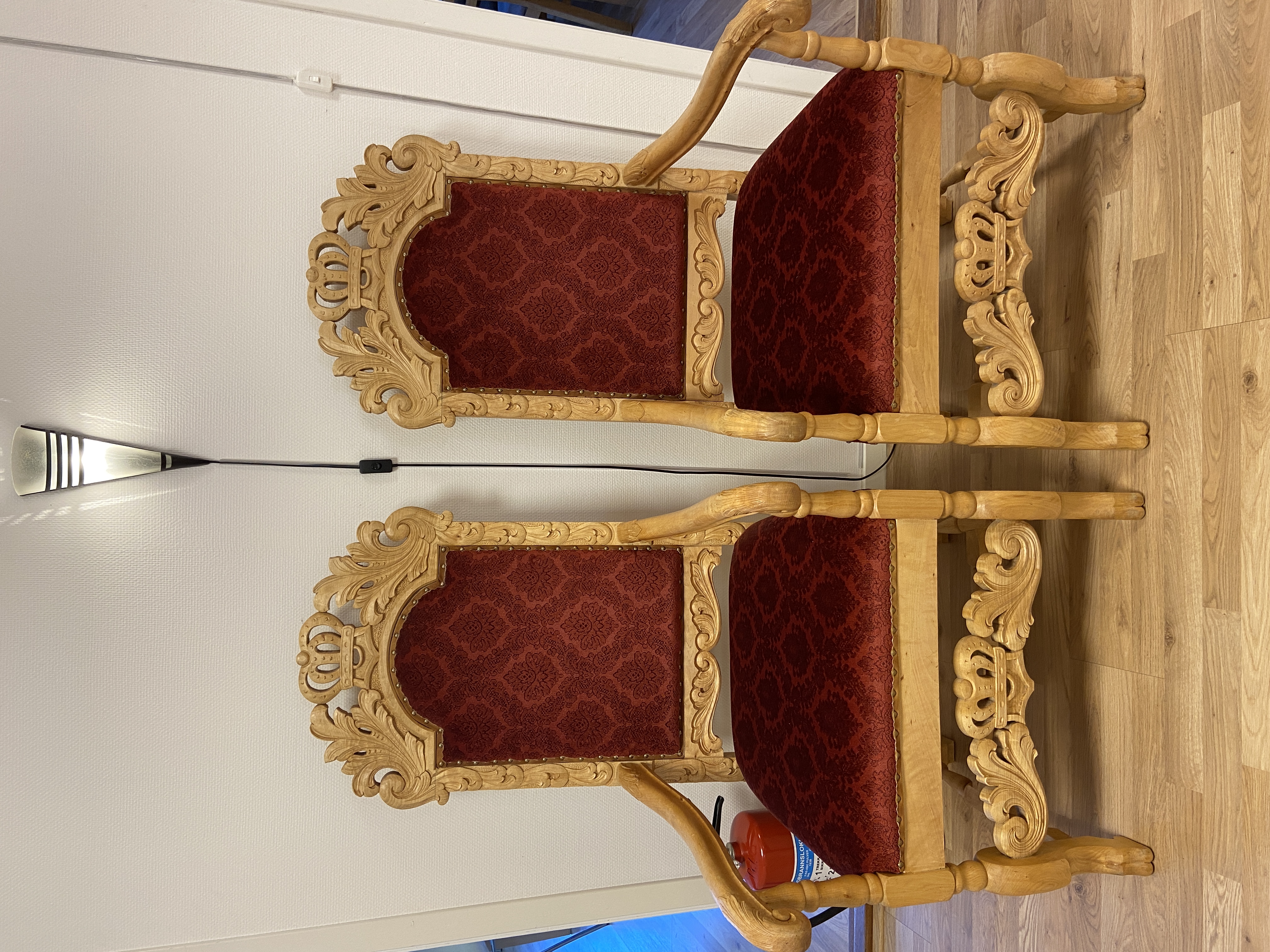
Bride and Groom Chairs in the City Church
Flexible room
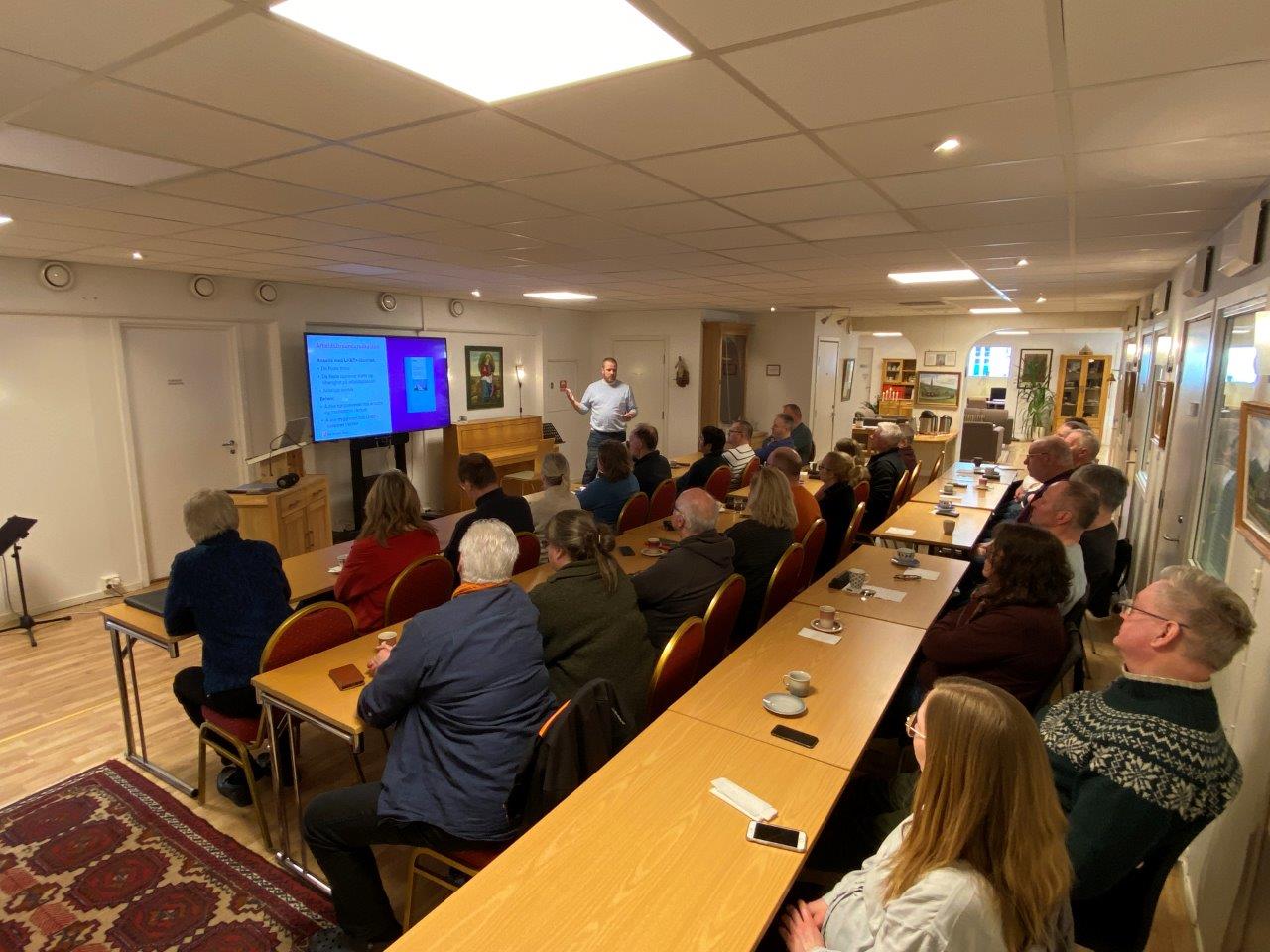
Meeting Room Setup
Otta City Church is a flexible room that can be used for much more than religious ceremonies. The room is also available for meetings, courses, and other gatherings. It can easily be transformed into a conference room or venue for celebrations. A fully equipped kitchen is connected to the space.
Please contact the church office for more information.